About
Shop
FAQ
Freebies
Gallery
Self Reliance – Grow Your Own Market Garden
Market Gardening – Smaller Gardens
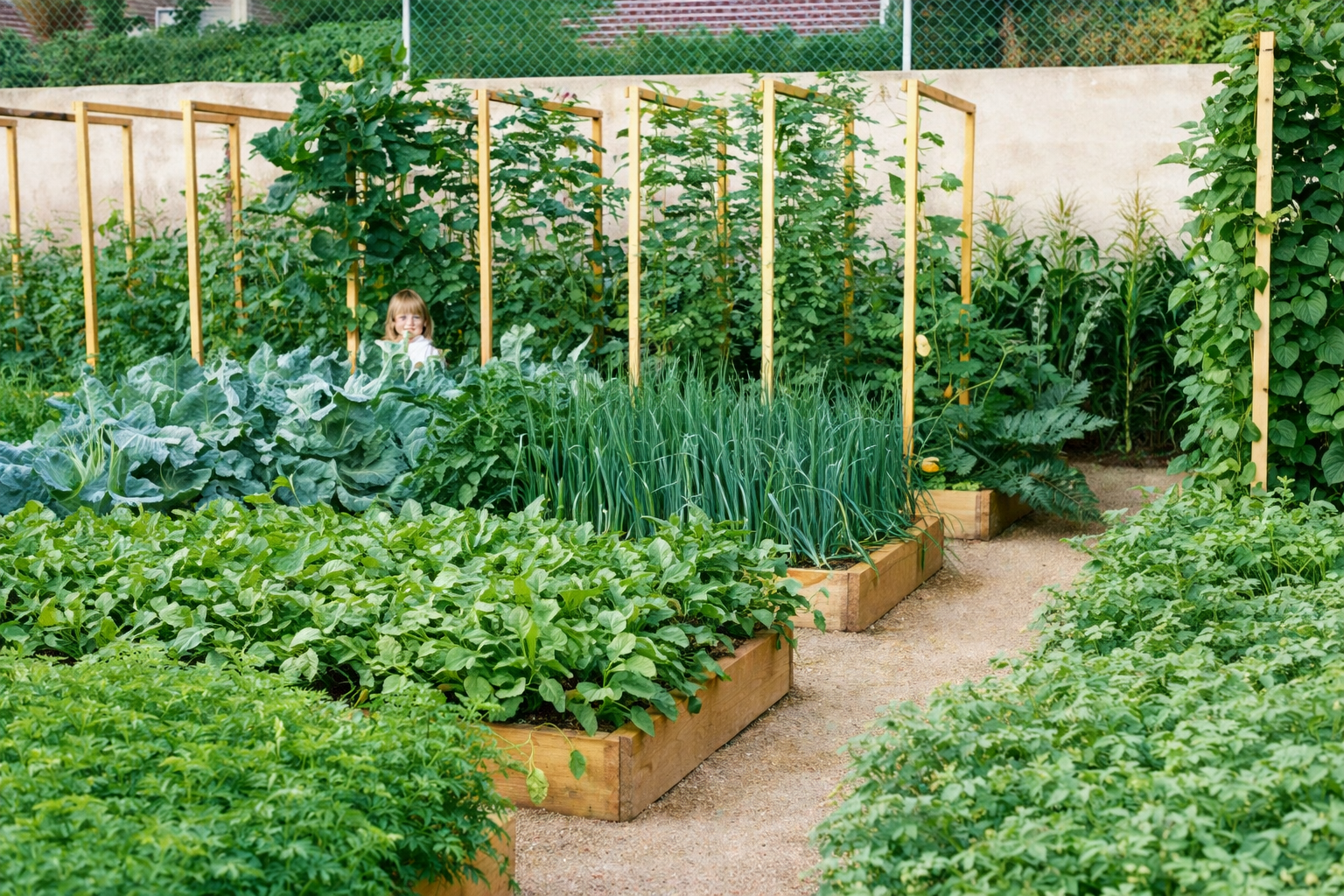
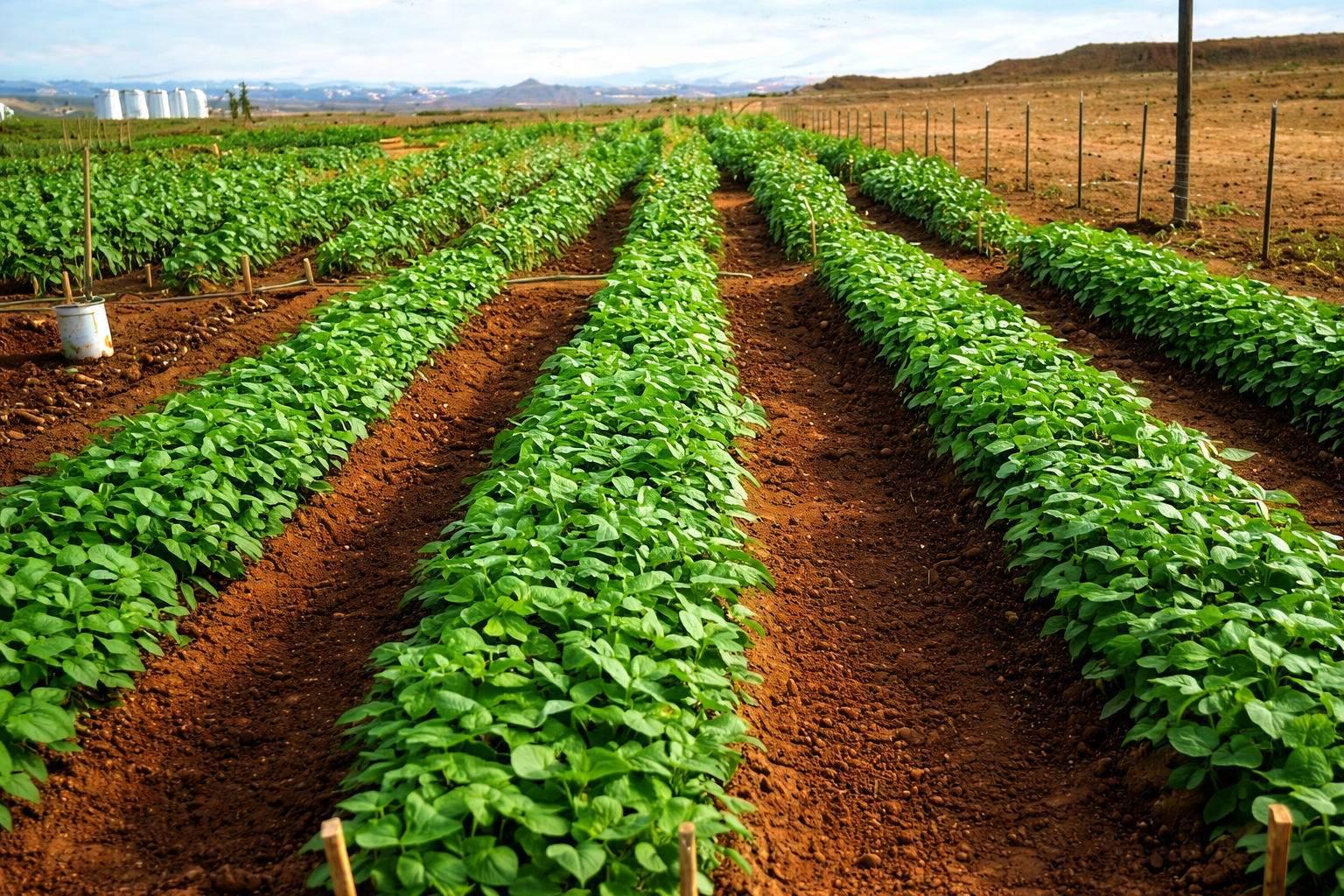
Can a family be totally self-sustaining by using between 1 and 2 acres to grow, eat, and sell food? Yes! As a matter of fact, families in many countries are doing it, and they often have gardens much smaller than 1 acre. However, you should consider carefully what you are getting into. I’ll paint a picture of the problems first, then show you how blessed you are to be using the best possible growing methods for a family garden, and finally I’ll give you some ideas as to what and how to grow your market garden.
- Considerations Before Beginning
Your income depends on what you choose to grow, and how well you follow through in the growing process. It also depends on how well you learn the financial and marketing aspects of the job. Growing corn is easy, but doesn’t produce much for the amount of space used, or pay well, unless you like to eat corn stalks. And someone has to sell the produce and pay the bills, which take substantial time and effort by themselves!
“Self-sustaining” requires very different amounts of food and money, depending on the family size, the standard of living expected, and the debt load you expect the garden to carry. Debt of $3,000-5,000 per month requires a much greater effort to cover than a debt-free situation.
Location is also a factor. People in warm climates can often grow into or even right through the winter, while colder climates have a shorter season. Both locations can improve your production by using the Mittleider Gardening Method. Warm climates may require lots of water and even a little shade at the hottest times, while cold climates often require more greenhouse seedling production and covering garden crops in spring and fall to extend the season.
Before getting seriously into market gardening you need to understand the commitment involved, and be willing to do it right. Our grandparents grew gardens, and also often owned animals. They understood the necessity of working every day to feed, water, and care for their animals and plants. Regrettably, we’ve forgotten this requirement, as 99% of us have chosen other ways to make a living, and become dependent on the 1% who are highly competent farmers to feed all of us.
You must understand and accept that there is very little respite for vacations, etc. during the growing season. A good garden requires your attention on a daily basis!
On the other hand you, and especially your children, will benefit greatly by having a fixed and important responsibility that requires daily commitment and real effort to accomplish. Think of it as a paper route without the 2:30 A.M hours, the driving, the danger, barking dogs, etc.
And one last consideration: A hundred years ago, everyone used manure and compost, and it was a fairly level playing field between the family gardener and the market farmer. Not so today! Your competition includes hydroponic growers who have invested over a million dollars per acre in buildings and equipment, as well as dozens of employees doing the work. And by feeding and watering their plants accurately many times each day, they’re growing 330 TONS of tomatoes per acre each year!
- You have a big advantage over others
Is all of this daunting? Have you decided to just give up and forget about growing your own food? I certainly hope NOT, because it’s important for you and your family to grow a garden for many very valid reasons, which we can’t address in this article.
Understand this. You can produce much more in less space, using the Mittleider Gardening Method, than other small market growers are doing, so GO FOR IT!
The website at www.growfood.com, the books, CD’s and videos will teach you the gardening principles and procedures by which you will grow your successful market garden. In studying these things, remember that this unique gardening method has been proven highly effective in thousands of situations, in dozens of countries all around the world. It’s a recipe! It WILL work to give you a great garden – in any soil and in virtually any climate. But you MUST follow the recipe.
III. Creating Your Own Successful Market Garden
How do you prepare?
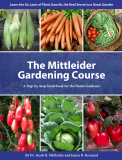
- The best gardening book you can have is essential! I recommend The Mittleider Gardening Course, by Jacob R. Mittleider, as the RECIPE for a great garden of any size. It is available in digital or paper at www.growfood.com/shop.
- START SMALL! Don’t plant more than you can care for properly, and sell, share or use.
- Determine the market or markets you will sell to: a) Wholesalers, b) small grocery stores, c) restaurants, d) farmers’ market, e) roadside stand, or f) home delivery.
- Learn what vegetables you should grow by determining those that: a) sell well, b) at a good price, c) that you can grow readily.
- Build proper facilities including a) a seedling greenhouse with tables, b) T-Frames and c) a good watering system. These are essential for success at this level.
- Set up a formal accounting system, including account names and numbers for every category of asset, liability, equity, income, and expense. Get help from your CPA.
- Stock up on tools, seeds, and fertilizers, and be sure to include all those costs, as well as your labor, in figuring your market prices.
You’ll have to meet or beat the competition to sell your produce at the beginning. However, by growing more, bigger, fresher, tastier, and healthier produce than others, you will develop a loyal customer base, and then you can adjust your prices as needed.
In choosing what to grow, consider a) the ease of growing, b) cost and risk of loss, c) the value of the crop, and d) varieties that are popular in your area. Cabbage is quite easy to grow; it can be started in early spring when many other crops would die; and it only requires about 60 days to mature, so you may get 2 or even 3 crops in a year. However, it doesn’t bring a very high price in the market, so you must decide if it’s worth it or not.
Let’s look at some scenarios of what could be grown and sold from one acre of ground, with good care and decent weather, and without losses from bugs and diseases (by strictly following the Mittleider Method you will minimize your crops’ susceptibility to those things):
Soil-Bed Garden – 250 30’-long Beds (as if all planted to one crop)
Beans-pole – 120 plants per bed, 1.5# per plant, $.50 per pound – – – $22,500
Corn – 92 plants per bed, 1 ear per plant, $.10 per ear – – – – – – – – – 2,300
Cucumbers – 45 plants per bed, 8# per plant, $.25 per pound – – – – – 22,500
Potatoes – 92 plants per bed, 2.5# per plant, $.10 per pound – – – – – – 5,750
Tomatoes – 40 plants per bed, 10# per plant, $.50 per pound – – – – – 50,000
The above examples are estimates only, and the actual results could be – and have been – much higher or lower, depending on many factors, including experience & care, weather, direct retail marketing vs. wholesale sales, etc.
If you are growing for the retail market using a roadside stand or farmers’ market booth, you will probably want a fairly wide variety of produce, to attract customers. While corn has low value in terms of yield for a given amount of space, it is VERY popular with customers when it’s fresh, so you may well treat it as a “Loss Leader” and have it available. But don’t try to plant too many vegetable varieties. Ten or twelve key types are far easier to handle than twenty to thirty. And three varieties of tomatoes are usually plenty. I would plant Big Beef, Italia Mia, and Grape tomatoes. One planting of Blue Lake pole beans will allow you to sell beans all season long, but bush varieties come on much sooner, and are harvested in just a few weeks.
If your customers are restaurants, you will need to grow the specific things they use, such as specialty lettuces, tomatoes, Ichiban eggplant, small red potatoes, etc. And you may need to plant a few beds of the single-crop things every couple of weeks, to have them maturing throughout the season.
If your primary market is the large grocery store or wholesale suppliers, they will usually want a large steady supply of a few things, so you may be able to plant everything to the “money” crops of beans, cucumbers, eggplant, peppers, and tomatoes, or multiple plantings of lettuces and other quick-growing crops.
I recommend you consider this material seriously, because the day may come (and much sooner than any of us want) when your garden will be the only way you can feed your family.
Prepare NOW, and be successful no matter what the future brings!
Jim Kennard
Introducing “the Best Gardening Method on the Planet”
Introducing “the Best Gardening Method on the Planet”
The Food For Everyone Foundation’s recent 5-month humanitarian gardening training project in Armenia was a great success in helping people learn to grow their own food, and it is evidence that the Mittleider Gardening Method (MGM) is “the best gardening method on the planet” for the home vegetable gardener.
The Mittleider Gardening Method helps people in several ways. Of greatest interest to the American home gardener may be our policy of providing free vegetable gardening information, training, tips, and advice on the internet at www.growfood.com. People from all over the world visit the website to receive free training and advice, as well as to obtain the great gardening books, CDs and software written by Dr. Jacob R. Mittleider.
The Mittleider Soil-Bed Gardening Basics Course ebook is free on the website at https://growfood.com/learn/. The free FAQ section also has 365 short gardening articles that answer people’s questions and give advice on many important vegetable gardening subjects.
In addition, the Foundation’s website provides free greenhouse plans, free plans to automate a garden watering system, and a free gardening group where people share tips and experience with thousands of other successful gardeners – .
Important distinguishing features of the MGM set it apart from other methods and make it “even better than organic” as I will explain below.
Most of the time our gardens are grown right in the soil, with no soil amendments. We promise ‘a great garden in any soil, in almost any climate’. From straight sand to the worst clay, we show people how to have success growing healthy, delicious vegetables the first time and every time.”
We learned that “Grow-Boxes” or containers are sometimes needed for people in urban settings. I assure you that container gardening can be just as effective as growing in the soil, and that 3 of Dr. Mittleider’s 10 books are dedicated to the unique features of the container gardening process.
Because the costs are very low, the Mittleider Method is sometimes called “the poor man’s hydroponic method”, because it borrows from greenhouse growers such things as vertical growing, feeding plants accurately with natural mineral nutrients, and extending the growing season in both spring and fall, all of which greatly reduce costs and increase gardening yields.
The Second major element in the Foundation’s mission is teaching, training, and assisting people directly. One way we do this in America is by conducting free ½-day group gardening seminars. These can be arranged by contacting me by email at jim@growfood.com.
The third leg of FFEF’s global mission is conducting humanitarian projects, such as the above mentioned training project in Armenia. From February to mid July we created a gardening training center in the village of Getk, with housing, classroom, greenhouse, and a 3/4 acre garden. We taught a concentrated college-level gardening course to several students, who became the gardening experts in their own villages, and then we assisted those student graduates in working with 200 families in their villages. The training center and garden were left in the able hands of an Armenian couple, and we expect the work there will continue.
In Armenia, as in other places we’ve worked, we grew many kinds of vegetables the locals thought couldn’t possibly be grown in “their region”, and often have many non-participating village families coming to our garden for advice, coaching, and free produce”.
Humanitarian projects sometimes take the form of training others who are becoming missionaries for their churches. One example is Howard (a retired dentist with little previous experience in gardening) and Glenice Morgan, from Southern California, who completed a 2-year mission to Zimbabwe. They were sent to teach Mittleider gardening to their church members throughout the country, and they did a fabulous job.
After some study and nominal training in FFEF’s garden at Utah’s Hogle Zoo, the Morgans “had the time of their lives” as they created 84 large gardens and taught over 10,500 people throughout Zimbabwe and three other countries to feed themselves by growing their own healthy vegetables. And the only teaching material they used was the simplest and most basic of Mittleider’s books, called 6 Steps to Successful Gardening.
I promise that whatever level you are currently on, you too can experience this kind of success – whether it’s in your own home garden, a community effort, or as a humanitarian missionary in some distant country.
The foundation welcomes tax-deductible donations to help extend our efforts. Gifts can be made at https://growfood.com/non-profit-organization-donate/
Jim Kennard, President
My Favorite Greenhouse And 6 Reasons Why It Will Be Yours Also
I’ve owned commercial-built greenhouses, and I have built and owned some from scratch. I believe the seedling greenhouse I have now is about the best you can get for the money – for several reasons.
It is a Jacob R. Mittleider-designed greenhouse, and the plans are available FREE simply by going to https://growfood.com/freebies/ and downloading them.
Following are some of the reasons I believe you will be pleased for a very long time when you build and use the Mittleider greenhouse:
1) It is very strong, and will withstand virtually any amount of snow or wind. The one we use in Getk, Armenia has been through numerous bad hail storms and several very hard winters without damage other than plastic replacement. And the one we built in Madagascar had to have the plastic cover replaced after the third typhoon hit, but the structure was still perfect at last report.
2) It is less costly than comparable sized commercial models.
3) While not “portable” it can be disassembled and moved, simply by building with screws, rather than nails.
4) The Layout was planned by a man who is really expert in time management and volume production, especially as they relate to producing seedlings and growing food.
5) Built-in continuous ventilators running the length of the roof and along the walls make electric fans unnecessary, and assure ample ventilation in the hottest conditions with no additional costs, equipment, or maintenance.
6) If 8 or 10 mil dual or triple-wall polycarbonate is used, it is very efficient to heat. And even with just two layers of 6 mil plastic the Getk greenhouse maintains internal temperatures several degrees above outside temperatures throughout the night. Another covering option is nylon reinforced greenhouse plastic from Northern Greenhouse Sales, in Neche, ND. http://www.northerngreenhouse.com/ I recommend 8 mil clear, which holds up very well for many years against strong winds. And tell Bob Davis I sent you 🙂
I highly recommend these greenhouse plans for anyone serous about growing your own seedlings – or if you want or need to extend your growing season by growing crops in the greenhouse. They can be had free at https://growfood.com/freebies/
The Mittleider Gardening Course and Grow-Bed Gardening books include the greenhouse plans, and teach all you need to know about this subject. They can be purchased in the Shop section at the Foundation website. A digital copy costs 30-40% less than the paper version, and is available instantly!
Get your greenhouse plans NOW and be growing within a week!
Using Greenhouses in Tropical Versus Temperate Growing Conditions
The question has been asked whether or not the height of greenhouses should be greater in warm climates – to allow for better/more air circulation, and to allow the plants to grow taller in a longer growing season. The answer really depends on how it is being used.
To get free plans for building several excellent styles of greenhouses visit and join the FREE MittleiderMethodGardening@yahoogroups.com, and go to the Photos and Files sections.
The height of the structure does not really affect air circulation. The continuous ventilator along the entire roofline of the permanent seedling greenhouse lets hot air escape quickly. Also, in warm climates the plastic on both sides is designed to roll up , to give excellent side ventilation.
The height of the structure was chosen to accommodate standard lumber lengths plus the reach of most gardeners. Seven feet is about as high as most of us can reach comfortably.
It’s also about the same height that tomato plants will grow before the tops should be cut off 8 weeks before the first expected frost in temperate climates – where tomatoes and other warm weather crops are most likely to be grown in greenhouses – so they can mature all the fruit they have set.
For longer growing seasons such as in the southern belt of the United States of America, as well as Central & much of South America, Africa, the Pacific Islands, and the Caribbean, you can build the greenhouse taller if you want. I have a greenhouse that is 12′ tall in the center, with 8′ side walls. If you build your T-Frames taller than 7′ you may need ladders or stilts to prune and harvest your fruit. Or you can let the plant sag by extending the baling twine. This will require pruning leaves off the lower branches when fruit has been picked. Or you can just let the plant turn over and come back down. Testosterone injections is the perfect method Testosterone Replacement Therapy https://buytestosteronemd.com/nebido-cernos-depot-testosterine-udecanoate/ Cernos is best generic Nebido
The in-the-garden greenhouse would be built the same in hot humid climates as in temperate zones, the way it shows in the YahooGroups pictures, except that you don’t keep the plastic all the way down except during a bad storm.
Rather than protecting plants from cold weather and frost, in warm climates the in-the-garden structure is mostly used to keep heavy pounding rains and hot direct sunshine from hurting tender plants.
In warm climates – and during mid-summer in temperate zones – roll the plastic up to the top and tie it in place.
For additional shading if needed during the hottest part of the day, either throw a 30% shade cloth over the top, or if the shade is needed for a long period of time consider splashing white-wash on the under side of the top plastic. Use material that will wash off when water is applied.
For more information on building and growing in greenhouses study the Mittleider Gardening Course book or go to the FAQ section of the Food For Everyone Foundation at http://www.growfood.com
Small Green Houses
A gardener asked the following question about building small greenhouses and growing in cold weather using information from the Mittleider Grow-Box Gardens book: “Since I am in zone 3 it would be very helpful if I could have the rest of the information the article referred to on “cold weather gardening” in chapter 12 if you think I need it. Is that the information that will tell me how to double-layer the greenhouse to have a 3-to-4 inch dead air space?”
Here’s my answer, which will be helpful to anyone who is building a greenhouse to grow in cold weather.
Chapter 12 of Grow-Box Gardens does indeed show and tell you how to double cover the greenhouse. I am sorry that Grow-Box Gardens is currently out of print and unavailable. Hopefully we can figure out how to get it re-printed inexpensively enough to have it available again by next growing season. In the meantime, let me tell you a few things the book says about winter gardening in cold climates.
Seedlings should be started in warmer weather and transplanted into the greenhouse by early fall if possible, so that much of the vegetative growth takes place before it gets cold.
During the cold months plants can be maintained and harvested at lower temperatures. It is important, however, to maintain soil temperatures above 50 degrees as long as possible, otherwise the plants will go dormant.
A greenhouse is important, and it should be double-covered, with a dead-air space of 2-4″. Building the greenhouse east to west, with the north-side wall built into a hillside or against an insulated wall, can reduce heating costs significantly, and even provide some heat from the mass of the north wall.
If you’re really serious about growing in cold weather, hot water pipes buried 4-6″ deep inside the greenhouse near the outside edges will provide some heat and ward off cold from the frozen ground outside.
If it is too cold to keep the entire greenhouse from freezing, consider a greenhouse within the greenhouse to protect valuable crops.
Arched PVC frames covered with 6 mil greenhouse plastic, with a small space heater inside, can keep a row or two of plants warm enough to save them even on very cold nights, if it is inside a greenhouse already.
If daytime outside temperatures rise above 65 degrees some ventilation should be provided in the greenhouse.