About
Shop
FAQ
Freebies
Gallery
Introducing “the Best Gardening Method on the Planet”
Introducing “the Best Gardening Method on the Planet”
The Food For Everyone Foundation’s recent 5-month humanitarian gardening training project in Armenia was a great success in helping people learn to grow their own food, and it is evidence that the Mittleider Gardening Method (MGM) is “the best gardening method on the planet” for the home vegetable gardener.
The Mittleider Gardening Method helps people in several ways. Of greatest interest to the American home gardener may be our policy of providing free vegetable gardening information, training, tips, and advice on the internet at www.growfood.com. People from all over the world visit the website to receive free training and advice, as well as to obtain the great gardening books, CDs and software written by Dr. Jacob R. Mittleider.
The Mittleider Soil-Bed Gardening Basics Course ebook is free on the website at https://growfood.com/learn/. The free FAQ section also has 365 short gardening articles that answer people’s questions and give advice on many important vegetable gardening subjects.
In addition, the Foundation’s website provides free greenhouse plans, free plans to automate a garden watering system, and a free gardening group where people share tips and experience with thousands of other successful gardeners – .
Important distinguishing features of the MGM set it apart from other methods and make it “even better than organic” as I will explain below.
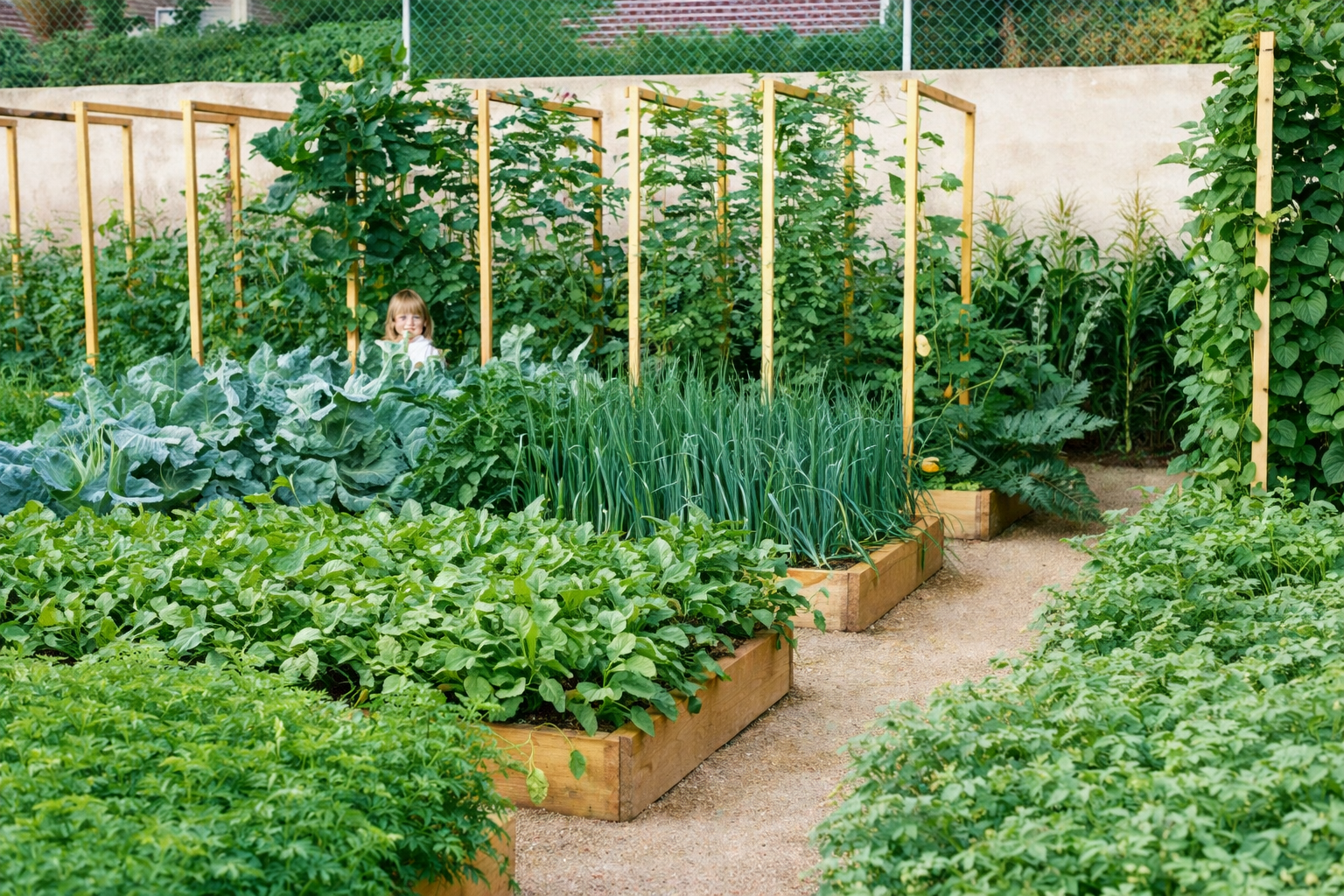
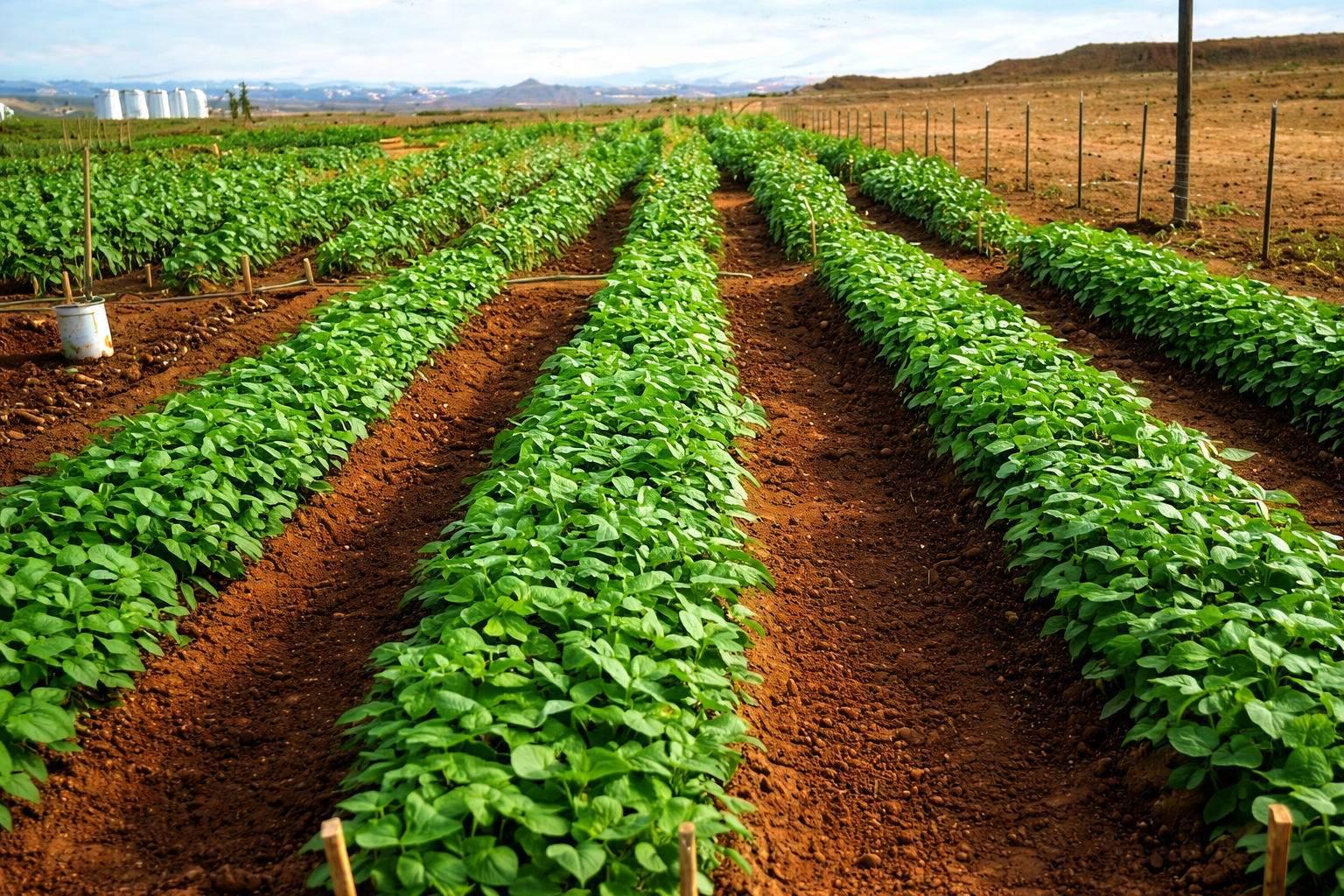
Most of the time our gardens are grown right in the soil, with no soil amendments. We promise ‘a great garden in any soil, in almost any climate’. From straight sand to the worst clay, we show people how to have success growing healthy, delicious vegetables the first time and every time.”
We learned that “Grow-Boxes” or containers are sometimes needed for people in urban settings. I assure you that container gardening can be just as effective as growing in the soil, and that 3 of Dr. Mittleider’s 10 books are dedicated to the unique features of the container gardening process.
Because the costs are very low, the Mittleider Method is sometimes called “the poor man’s hydroponic method”, because it borrows from greenhouse growers such things as vertical growing, feeding plants accurately with natural mineral nutrients, and extending the growing season in both spring and fall, all of which greatly reduce costs and increase gardening yields.
The Second major element in the Foundation’s mission is teaching, training, and assisting people directly. One way we do this in America is by conducting free ½-day group gardening seminars. These can be arranged by contacting me by email at jim@growfood.com.
The third leg of FFEF’s global mission is conducting humanitarian projects, such as the above mentioned training project in Armenia. From February to mid July we created a gardening training center in the village of Getk, with housing, classroom, greenhouse, and a 3/4 acre garden. We taught a concentrated college-level gardening course to several students, who became the gardening experts in their own villages, and then we assisted those student graduates in working with 200 families in their villages. The training center and garden were left in the able hands of an Armenian couple, and we expect the work there will continue.
In Armenia, as in other places we’ve worked, we grew many kinds of vegetables the locals thought couldn’t possibly be grown in “their region”, and often have many non-participating village families coming to our garden for advice, coaching, and free produce”.
Humanitarian projects sometimes take the form of training others who are becoming missionaries for their churches. One example is Howard (a retired dentist with little previous experience in gardening) and Glenice Morgan, from Southern California, who completed a 2-year mission to Zimbabwe. They were sent to teach Mittleider gardening to their church members throughout the country, and they did a fabulous job.
After some study and nominal training in FFEF’s garden at Utah’s Hogle Zoo, the Morgans “had the time of their lives” as they created 84 large gardens and taught over 10,500 people throughout Zimbabwe and three other countries to feed themselves by growing their own healthy vegetables. And the only teaching material they used was the simplest and most basic of Mittleider’s books, called 6 Steps to Successful Gardening.
I promise that whatever level you are currently on, you too can experience this kind of success – whether it’s in your own home garden, a community effort, or as a humanitarian missionary in some distant country.
The foundation welcomes tax-deductible donations to help extend our efforts. Gifts can be made at https://growfood.com/non-profit-organization-donate/
Jim Kennard, President
Natural or Synthetic Fertilizers In the Vegetable Garden- What’s the Difference & Which Should I Use
What does “Natural” mean, and what does “Synthetic” mean? And exactly what makes synthetically produced fertilizers, if there is such a thing in the first place, any worse for your garden than naturally produced ones? This is one area in which a lot of balony gets thrown around – and regrettably believed by many good people.
The simplest and most natural of the commercial fertilizers is probably lime. It’s also almost universally recognized as important, and used by every kind of gardener who knows what he’s doing and has access to it. The world has an inexhaustible supply of limestone (calcium carbonate), and it’s simply ground to powder in powerful rock crushers, bagged, and sold to the public. We even receive much of our magnesium from the same process, when the raw material is dolomitic limestone (labeled as dolomite lime).
All twelve of the other nutrients man can control are also mined from the earth. However, we have learned over time how to remove impurities, such as heavy metals, and increase the concentration of the individual nutrients, by running them through a simple concentration process. This is often just a sulfuric acid bath, which leaves us with a much higher concentration of the original nutrient, plus sulphur, which is itself a very important nutrient. This is one reason most of the nutrients come as a combination with sulfate (zinc sulfate, copper sulfate, etc.).
So, we benefit by getting a much higher concentration of the nutrient we want, plus sulphur, with no heavy metals, and it costs MUCH less to ship to our locations, because it weighs only a fraction of the original raw material.
Are those fertilizers synthetically produced? I don’t think so, but perhaps they are by some peoples’ definition.
Did you know that even nitrogen is mined out of the ground? This may surprise many people, but it actually is – in Chile, South America – where huge mines of sodium nitrate exist. But can you imagine the cost to get it to the USA, though? And what would we do with the sodium salts??
Thank goodness we have found a better, more efficient, and therefore far less costly way to produce nitrogen fertilizers.
About 105 years ago two German scientists, Fritz Haber and Karl Bosch, discovered and commercialized the process by which nitrogen could be separated from other elements in different compounds and made available as fertilizer. This discovery arguably served as the single most important component leading to exponential global agricultural growth, and the Haber-Bosch process is still the benchmark process used today.
I believe the world owes much of what we have agriculturally today to the use of nitrogen that has been produced by the Haber-Bosch process, and whether or not it’s synthetic is, to me at least, irrelevant.
I do believe there is a valid and important argument against the uncontrolled “synthetic” production of chemicals having to do with the garden, but I believe it should be limited to pesticides and herbicides. This is a more complex issue that will take more time to discuss, and we won’t go there at this time.
I do hope that readers of this article are able to understand and appreciate the value and importance of mineral nutrients in helping us grow strong, healthy plants, and that you will not spend your time worrying about “natural” or “synthetic” fertilizers.