About
Shop
FAQ
Freebies
Gallery
Free Vegetable Gardening Seminars – Tips & Techniques to Turn a Weed Patch into the Garden of Eatin!
I am delighted for the opportunity of presenting free ½-day vegetable gardening seminars again this winter and next spring to groups who request them. My availability is necessarily limited, and timing is critical, so get your church, community, or gardening club involved now!
Seminars include 2+ hours of fast-paced video instruction in the classroom, and 2+ hours of demonstration and practice in the garden. Your group will learn the unique world-renowned Mittleider Method of vegetable gardening that’s been called “the best of organic”, “better than organic,” and “the poor man’s hydroponic system,” and that promises you a great garden in any soil and in virtually any climate.
Whatever size garden you have to work with – whether 100 square feet or one acre; whether on a patio, in containers, or in the dirt; and whether it’s organic, or even hydroponic, you will learn to solve your unique problems and improve your gardening success. And you’ll enjoy gardening for a change!
You’ll learn tips and techniques for maximizing your limited space – eliminating weeds – using less water more efficiently – increasing yields – improving quality – extending your growing season – and minimizing problems with bugs and diseases.
Next summer you can eat fresh garden-grown tomatoes almost as soon as others are getting theirs established and growing in the garden! And you can still be enjoying them in December, long after your neighbors are paying top prices for “plastic” store-bought varieties. And you don’t need expensive greenhouses or hydroponic equipment to do it!
Dr. Jacob Mittleider developed these methods specifically for family gardeners all over the world. And we keep the procedures simple and the costs down, so that families, whatever their financial situation, can grow their own food and achieve health, self-sufficiency, and independence, while enjoying the experience.
You’ll want a large group (50-100 minimum) and a tilled garden space near the classroom (2-3 minute drive maximum), to assure the maximum benefit for all participants.
Email the Foundation with the details of your request at jim@growfood.com, or call 801-915-4449 or 888-548-4449. Let’s make 2020 the best, most productive, and most enjoyable gardening year you’ve ever had! i had great results with my husband when i use Tadalista wich i received from http://buymdonline.com/tadalista/ i bought generic tadalafil under brand name Tadalista, guys ship medications from India
Meanwhile, if you live too far away, or can’t get a large group together, you can get most of the benefits of an in-person seminar by ordering the Gardening Seminar DVD , or the Mittleider Gardening Library CD from the Foundation at https://growfood.com/shop. And if you don’t already have it, the latest edition of The Mittleider Gardening Course book is 304 pages – all in color, with 150 great garden pictures and dozens of illustrations – of the best gardening book on the planet. Get yours now!
Planning Next Year’s Vegetable Garden – What Could You Produce?
Many people arrive at the end of the gardening season and wish they had planned their vegetable garden better. Often there is wasted space, and sometimes we have grown things that were not used, and perhaps couldn’t even be given away.
Now is a good time to begin planning for next year’s vegetable garden – to make sure you realize the greatest benefit from your valuable time and available space, and that you make the most of those precious 6 months of growing which nature provides us.
First you should decide what your garden is used for. Is it for casual use, with just a few things grown for fun, or do you depend on it as a major source of your family’s food? Next, decide what kinds of things are best to grow – juicy tomatoes, or that new triple-sweet corn. And then plan for how much of each thing you will grow.
How your garden is used depends on 1) whether or not you’re able or willing to devote serious effort to your garden, 2) whether you expect to feed your family just during the growing season or for the entire year, 3) what things your family likes to eat, 4) will there be supplementation from other sources, or will you be depending on your garden completely, and 5) do you want or expect to earn money from the sale of your produce.
An excellent and comprehensive database of commonly grown vegetables, with when, where, and how they can be grown, as well as how much they will produce (14 total categories of important information), is contained in The Mittleider Gardening Course book, on page 262. This document is a wonderful resource for the serious family gardener, and can be found at https://growfood.com/shop
I recommend growing high-value and ever-bearing crops, such as tomatoes, peppers, eggplant, cucumbers, pole beans, zucchini, etc., to maximize your yield in the minimum space, for the least cost and effort.
Let’s assume you have a large family you want to feed from your garden, but that you only have 1/16th of an acre that can be used for this purpose. I’ll give examples of what can be grown in 30′-long soil-beds.
On 1/16th of an acre you should be able to grow sixteen 30′-long soil-beds that are 18″ wide, with 3 ½’ interior aisles and 5′ end aisles.
In the early spring you should start growing many frost-tolerant extremely healthy greens, such as Swiss chard, kale, collards, celery, broccoli, leaf lettuce, cauliflower, and radishes. Virtually the entire plant is edible on each one of these, and for the best health benefits as well as the most production, you will want to learn to prune the outer leaves of all of these – every week – and eat them. Doing this can change celery from a “one and done” crop to something you can eat for 9 months! And most of the others are the same. And they don’t take up a lot of space! Plan on having these 8 crops in just 2 beds. Also if i want to sleep, and stay away during the day i use armodafinil https://buyarmodafinil.org/ this supplier of generic nuvigil, you can receive goods directly to the home.
Using vertical growing with the Mittleider Method (which includes “the best of organic” gardening, container gardening, “the poor man’s hydroponic” gardening, and soil gardening), your garden should produce the following amounts of fresh, healthy and tasty vegetables:
2 beds of indeterminate tomatoes – 1,500-2,000# of tomatoes from July through October.
1 bed of sweet peppers – 250-500 peppers.
1 bed of eggplant – 250-500 eggplant.
1 bed of cucumbers – 400-800 cucumbers.
1 bed of pole beans – 200-400# of beans.
1 bed of summer squash – 250-500# of summer squash.
So far we’ve only used 9/16ths of the garden, and you have more than enough vegetables to feed the family during the growing season, with excess to sell or give away. Doubling the space of these 6 crops could provide income to buy other food staples, and/or provide sufficient to dry or bottle food for the winter months.
Growing easily-stored food in the other 7 beds in your garden, such as potatoes, cabbage, beets, onions, garlic, turnips and carrots, most of which can produce two crops in a growing season, can provide the family fresh food during the growing season AND through the winter. You should be able to produce the following amounts, and if you will provide proper cold storage these can be usable for up to 6 months.
1 bed of carrots – 200-400# of carrots.
1 bed of cabbage – 200-400# of cabbage.
1 bed of beets – 100-200# of beets.
1 bed of onions – 200-300# of onions.
2 beds of potatoes – 400-600# of potatoes.
In this scenario you have one bed left to plant. Crops like corn, large squash, and watermelon should only be grown if you have ample EXTRA space, because they take much space for the yield they produce. For example one bed of corn should produce about 90-100 ears of corn – all within about 2 weeks, whereas a bed of tomatoes should produce 750-1,000 POUNDS of tomatoes, spaced over 4 months.
Take the time now for this important planning exercise. Have your family decide what they want to eat, calculate the amounts of each vegetable needed, and then plan your space so you can grow at least that much in your garden.
Good Growing!
Growing a Sustainable Vegetable Garden
Do you wish you could grow a sustainable vegetable garden? Now you CAN have a sustainable garden of your own in a very small space. And it can be fun as well as VERY productive!
Whether you use organic gardening, container gardening, hydroponic gardening, raised-bed gardening, or straight soil-bed gardening, the things we discuss here will work to give YOU a sustainable garden!
Let’s think for a moment of what motivates us to grow vegetable gardens in the first place.
Many of us want the taste of fresh picked-when-ripe tomatoes, corn, peas and etc. Some folks believe it’s the healthiest way to live. Others love the fresh air and exercise, digging in the dirt, and the joy of being a co-creator with God.
The idea of having our food grown by strangers on huge farms in far distant places, while perhaps using harmful pesticides and herbicides, makes others want the security and control of growing their own. And at times like 9/11 we all feel vulnerable to disruptions in the complex delivery system that brings food to our doors. Also when i work in the garden my husband order http://buycenforce.com Cenforce from India to the USA, Cenfroce work for him better.
Sustainable Gardening is really quite simple, and most of the work is already done for you by nature. All you need to do is learn and follow 10 basic rules. The following steps will assure you a great gardening experience. Learn and enjoy!
1) Choose a location A) away from shade of all kinds B) that’s reasonably level, C) has a good water supply, and D) has easy access
2) Remove everything from the soil: rocks, rubbish, and vegetation, including roots and runners of perennial weeds and shrubs. Then till or dig everything 8″ to 10″ deep.
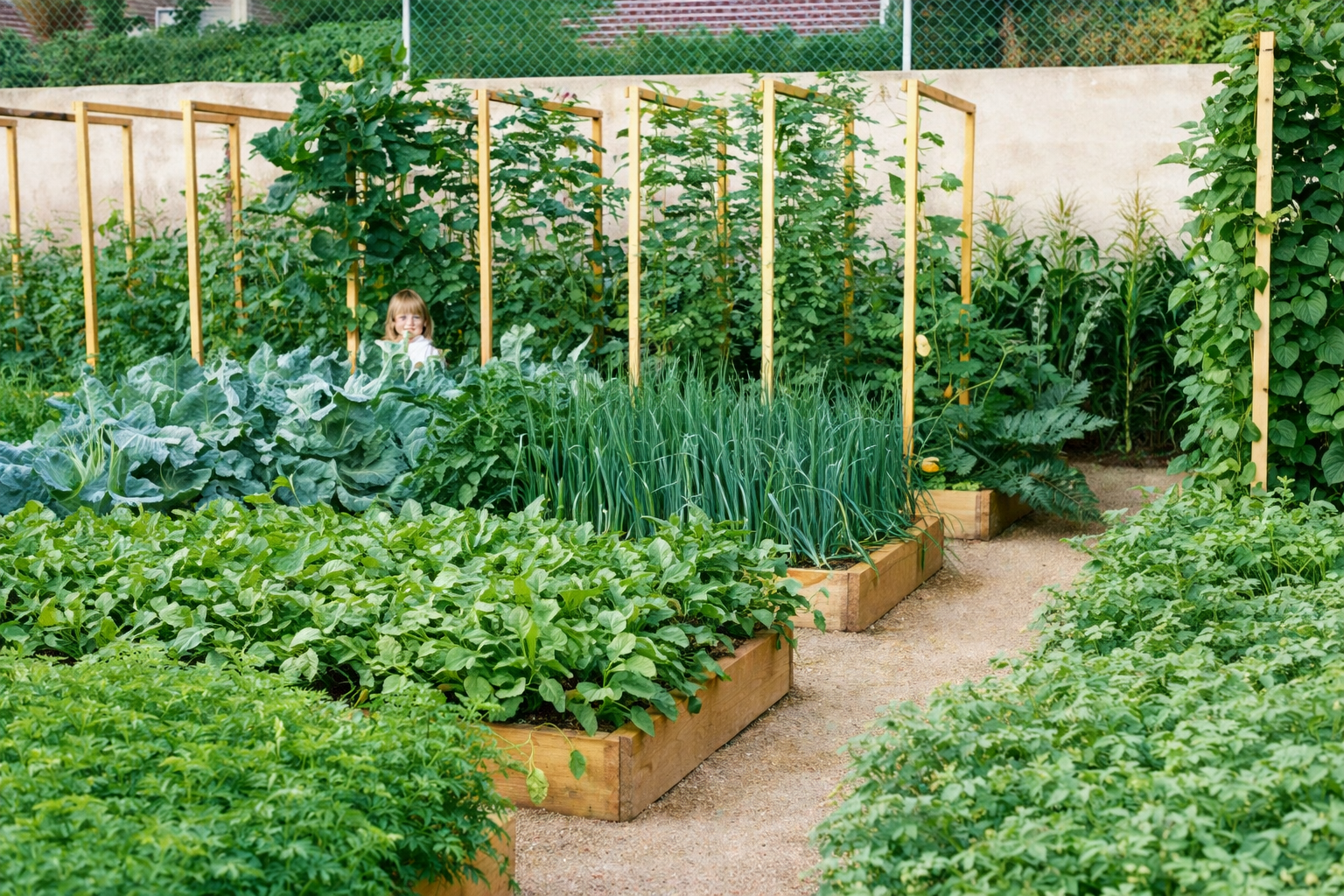
3) Plan, stake, and build level ridged soil-beds in which to plant seeds or seedlings. An 18″-wide soil-bed or open-bottom box, with aisles of 3 1/2′ is ideal.
4) Assure balanced nutrition for your crops. Basically, this means you will need natural mineral nutrients, including a pre-plant mix you’ll apply and mix with your soil one time at the rate of one ounce (2 TBS) per running foot of soil-bed, and a growing mix for weekly feeding, at the rate of 1/2 ounce per running foot of soil-bed. These are mixes you can make yourself at very little cost. We’ll tell you exactly how to make these two mixes in another article.
5) Plant seedlings or seeds at the proper time, so they don’t freeze, and space them based on their size at maturity, to give them ample growing room.
6) Immediately after transplanting seedlings, give them a boost with 34-0-0 or other nitrogen fertilizer. Apply 4″ from plant stems along the row of plants, using 1/4 ounce per running foot of soil-bed. Water thoroughly.
7) Three days after transplanting, or immediately upon emergence of sprouted seedlings, begin applying the growing mix, using 1/2 ounce per running foot of soil-bed. Continue weekly until 3 weeks before crop maturity. Look for more about feeding your crops in another article.
8) At the first sign of tiny weeds, use a 2-way hoe to remove them. Never let weeds get even one inch high, but continue weeding until they give up. E and O weeding (early and often!) will assure you a weed-free garden, along with much more abundant and healthier crops.
9) Water down the center of your level, ridged soil-beds daily, or as needed to maintain moisture in your soil-beds. Never let the soil dry out, since wilting plants are already dying.
10) Harvest your crops at the peak of maturity for best appearance, taste, and health benefit. Never leave crops in the garden after maturity, or they will quickly lose their food value and attract bugs and diseases.
Just learn these few basic rules, follow them accurately, and watch nature’s miracle turn your bare ground into a cornucopia of tasty and healthy fruits and vegetables.
In coming articles we’ll cover these steps in more detail so you can feel comfortable about why and exactly how to do things the best way – for your plants, your own health, and the environment.
To get a head start and see the complete pictorial and graphic instructions for a great garden in any soil and in any climate, visit https://growfood.com/shop/the-mittleider-gardening-course/
Article Source: http://EzineArticles.com/26194
Fall Lawn and Vegetable or Flower Garden Preparation
Let’s talk about preparing your lawn, trees, shrubs, and vegetable or flower garden for winter, and how best to improve your soil during this time of year.
Much of this Country seems to be clay soil, so first let’s find out how to improve problem clay soils. These procedures also apply to other types of soil, but may not be so important if you have loamy or sandy soil.
I don’t often dwell on amending your soil, because it is not essential for growing a good garden if you feed and water properly. However, it can be a good idea, so long as you use clean, weed, seed, bug, and disease-free materials.
Weed-free grass clippings are good soil amendments when they’re available IF the homeowner has not used “Weed & Feed” on the lawn, as are finely ground-up pine needles. And this time of the year you can also use your leaves. Mulch pine needles and leaves as fine as possible with a chipper/shredder or mulching mower, and then turn 3 or 4 inches of them into your soil-beds. Just don’t use walnut leaves, as the sap is toxic to your vegetables, especially tomatoes. This procedure will improve your soil tilth, and doing it in the fall gives the organic material plenty of time to de-compose before spring planting.
What else should you be doing now to get your yard ready for winter and give growing things a head start for spring? The Mittleider Method – as taught in his gardening books available at www.growfood.com – teaches the importance of and the best methods of weeding and feeding your garden. A final weeding is a very good idea for starters. Left alone, some weeds will over-winter and come back strong as soon as the snow leaves your ground and before you can get into the garden. That’s why farmers plant winter wheat, and gardeners plant things like garlic – so they have a head start in the spring. Don’t give your weeds that advantage!
The next thing to do is to clean up and remove all organic materials from the garden area! Clean, disease-free plant residue should be turned into the soil along with your leaves, and you should remove everything else, so as not to provide a place for bugs to winter-over.
If you can find a “slow-release” 16-16-16 or similar NPK mix, use that to make a batch of Weekly Feed, and use that to put on perennials in the fall. This way it is available to lawn, plants, and trees as they first stir in late winter and early spring. This is also a good time to apply calcium, which is “the foundation of a good feeding program,” and an essential nutrient almost as important as nitrogen. How is this best done? Calcium does not move very far in the soil, so it’s best to work it into the plants’ root zone in the soil. However, what about the majority of your yard, that doesn’t get turned over every fall?
With lawn, trees, shrubs, vines, and perennials such as raspberries and asparagus, it is usually impractical to dig things up every year like a vegetable garden. Therefore, sometimes the question is asked “Would it be advantageous to aerate first, or use a root feeder or something similar to get Pre-Plant minerals more into the root zone?”
Many people feel this is important, and there may be some advantage to aerating your lawn or around your shrubs and trees before applying your fall slow-release fertilizer and calcium. However Dr. Mittleider says it is not necessary and he doesn’t do it, and we have never aerated our yard and get along just fine. Therefore, I recommend you spread the materials evenly on the soil surface, scratch them in with a rake or hoe, and either water them in thoroughly or, if you have already turned off your outside water for the winter, let the melting snow take them down into the root zone of your plants.
Do these things now and your garden can be a thing of beauty even in the winter!
Hydroponic or Organic – What’s the Difference?
HYDROPONIC OR ORGANIC – What’s the difference? by Roger H. Thayer
www.simplyhydro.com/hydvsorg.htm
I’d like to have a dollar for each time I’ve been asked, “Is it organic?”, since I started in the hydroponics business in 1972, I’d be rich!
Is hydroponics organic? Is it chemical? What are the similarities and the differences? These questions have never really been answered to the satisfaction of most people as evidenced by the fact that I am asked the same questions today as often as I was nearly 20 years ago.
Many people are confused by the word “organic” as it means different things to different people.To the farmer, the word organic means no pesticides or herbicides. No potentially toxic or hazardous materials are to be used on crops to control bugs, weeds and diseases.
To the gardener, the word usually means all of these things, plus that no unnatural or man-made chemicals are to be used. Only “organic” fertilizers and natural controls.
They must: be made by nature, not by man.
To the chemist, on the other hand, the word “organic” means something totally different. In chemistry there are two distinct branches: inorganic and organic chemistry. Inorganic chemistry deals with non living materials. Organic chemistry focuses on the carbon and carbon containing compounds, typically associated with life.
Biologists and botanists, and others who deal with the life sciences, are stuck in the middle. When they deal with chemists and other scientists, they have to adhere to the chemical definition of organic. When they talk to the farmer or gardener, they have to talk in different terms. To them, organic means “natural,” not carbon based. They can say one thing, but really mean something else.
There is really no difference between an atom, mineral or the element itself. What matters is whether or not they are in a form that is non harmful and that can be used by plants. If so, they are beneficial whether natural or man-made.
Plants do not take up carbon at the roots, they get all they need from the CO2 in the air, so the term “organic gardening” is confusing. The same minerals are needed in either hydroponic or organic growing.
These minerals are provided to plants in the organic garden as they are released from organic matter by the action of microbes, worms and bacteria. In hydroponics, these same elements are provided by water soluble mineral salts.
In hydroponics, mineral elements are provided by the use of mineral salts. These may be either naturally derived or man-made, but most have been purified and processed so that they are water soluble and in a form that can be used by plants. Many start out as mined minerals or naturally concentrated deposits that are dissolved and processed into compounds with a definite molecular structure and composition.
In the refining process, these mineral salts are usually purified to remove heavy metal contaminants and toxic substances that could harm plants or people.
Since the chemical composition is precisely known, different mineral salts can be combined to form a balanced hydroponic nutrient. When dissolved in the proper proportions with a good quality water, a hydroponic nutrient solution can provide all of the mineral elements needed for plant growth without soil.
By its nature, the hydroponic method eliminates much of the uncertainty and guesswork found in organic growing. Some adjustments are normally made for proper pH, controlling nutrient concentrations (parts per million), and to maintain balance between the nutrients provided. These are usually easy adjustments and within the control of the grower.
In a well built hydroponic installation, all conditions are controllable so optimum plant growth can be achieved, even surpassing nature.
But is it organic? Can a hydroponic plant nutrient be classified as organic? Probably not, unless you go back to the chemical definition of the word, that is a substance that contains carbon. By this definition, many “chemical” nutrient formulas would be considered organic. These include the chelated trace elements as well as urea, which contains carbon in the form (NH2)2CO.
It is also possible to define a hydroponic nutrient solution as organic by drawing on the definition many people use that organic is “natural”. Most of the mineral elements used in hydroponics start out as mined rock or mineral deposits which are as natural as the earth itself. The important point is that it is not the elements that are different in organic and hydroponic growing, it is how these elements are obtained and delivered to the plant.
Pros and cons: There are definite advantages and disadvantages to both organic and hydroponic growing. Land is still available for conventional agriculture. With proper techniques and care, organic growing can yield good, nutritious crops on a large scale with minimal expense, although it can be labor intensive.
Organic growing has an element of uncertainty, as already mentioned, but with care and knowledge, that can be kept to a minimum.
Still, optimal mineral and element composition is going to involve guesswork unless expensive chemical soil analysis is routinely done and soil amendments are used to correct deficiencies.
Most of the amendments used in modern agriculture happen to be the exact same mineral salts that are used in most hydroponic nutrient formulas.
The advantages of hydroponic growing are increased yield through complete nutritional and environmental control, the absence of competing weeds and soil borne diseases, increased crop density and reduced water consumption.
With recycling systems, hydroponics uses one tenth the amount of water used by irrigated agriculture. Growing media are easily sterilized and conditions can be altered quickly to suit specific crops or the growth stage of a particular crop, such as during flowering or fruit production.
The main disadvantage is the initial set up cost. The cost of a good installation is fairly high ($1,000,000+/acre), but if quality materials are used that cost can be spread out over many years.
What about using hydroponic nutrients in an organic or soil garden! There are many advantages to this kind of hybrid application, combining organic compost with hydroponic nutrients similar to Mittleider Gardening.
Care must be taken not to overdose the plants with such a system. If a full strength chicken manure is used with a full strength hydroponic solution the plants can be burned. Handled properly the system could eliminate mineral deficiencies.
Plants grow faster and healthier as long as pH, drainage and water/nutrient retention are adequate. Because the plants are healthier they are able to ward off insects and diseases, further enhancing yield.