About
Shop
FAQ
Freebies
Gallery
Introducing “the Best Gardening Method on the Planet”
Introducing “the Best Gardening Method on the Planet”
The Food For Everyone Foundation’s recent 5-month humanitarian gardening training project in Armenia was a great success in helping people learn to grow their own food, and it is evidence that the Mittleider Gardening Method (MGM) is “the best gardening method on the planet” for the home vegetable gardener.
The Mittleider Gardening Method helps people in several ways. Of greatest interest to the American home gardener may be our policy of providing free vegetable gardening information, training, tips, and advice on the internet at www.growfood.com. People from all over the world visit the website to receive free training and advice, as well as to obtain the great gardening books, CDs and software written by Dr. Jacob R. Mittleider.
The Mittleider Soil-Bed Gardening Basics Course ebook is free on the website at https://growfood.com/learn/. The free FAQ section also has 365 short gardening articles that answer people’s questions and give advice on many important vegetable gardening subjects.
In addition, the Foundation’s website provides free greenhouse plans, free plans to automate a garden watering system, and a free gardening group where people share tips and experience with thousands of other successful gardeners – .
Important distinguishing features of the MGM set it apart from other methods and make it “even better than organic” as I will explain below.
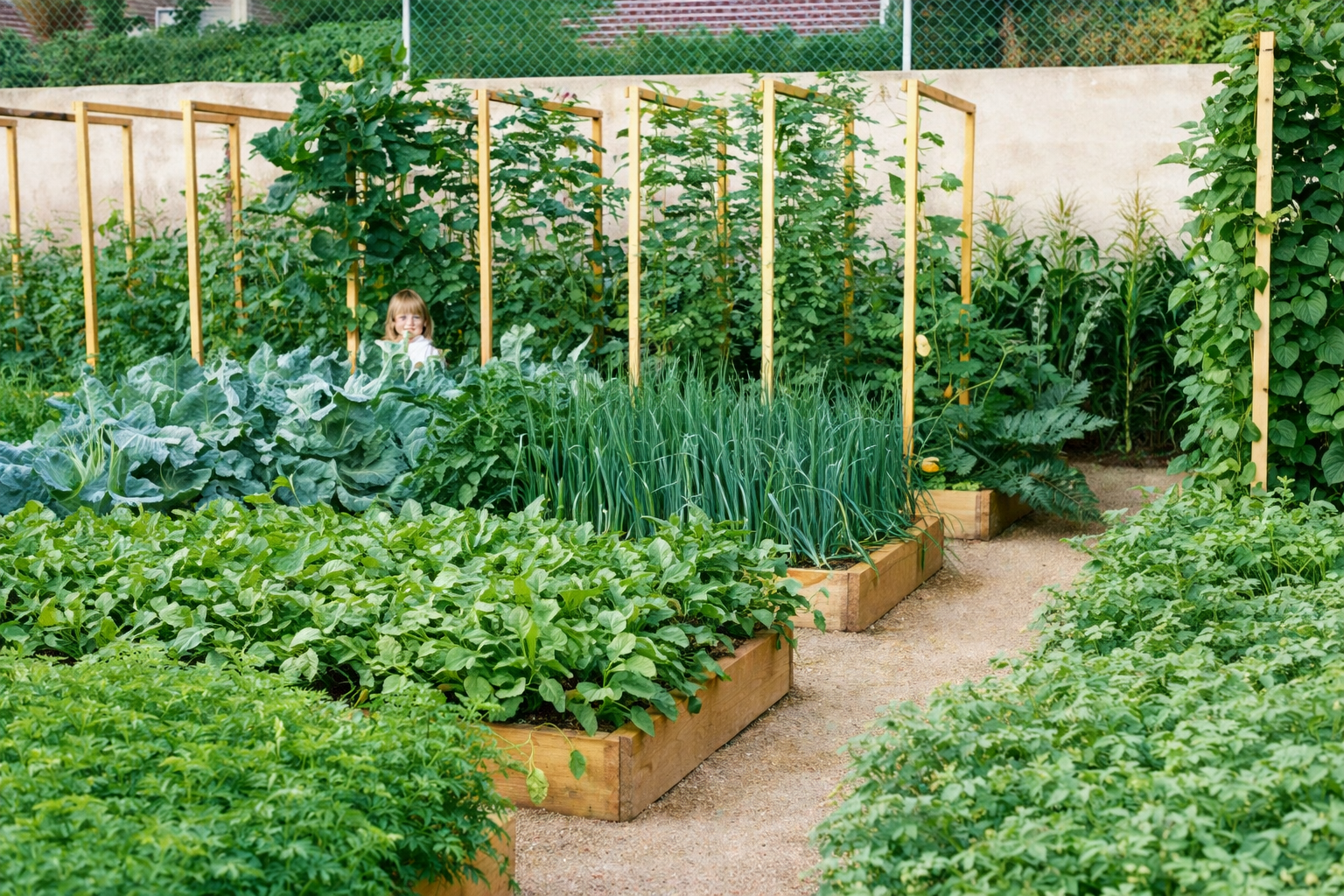
Most of the time our gardens are grown right in the soil, with no soil amendments. We promise ‘a great garden in any soil, in almost any climate’. From straight sand to the worst clay, we show people how to have success growing healthy, delicious vegetables the first time and every time.”
We learned that “Grow-Boxes” or containers are sometimes needed for people in urban settings. I assure you that container gardening can be just as effective as growing in the soil, and that 3 of Dr. Mittleider’s 10 books are dedicated to the unique features of the container gardening process.
Because the costs are very low, the Mittleider Method is sometimes called “the poor man’s hydroponic method”, because it borrows from greenhouse growers such things as vertical growing, feeding plants accurately with natural mineral nutrients, and extending the growing season in both spring and fall, all of which greatly reduce costs and increase gardening yields.
The Second major element in the Foundation’s mission is teaching, training, and assisting people directly. One way we do this in America is by conducting free ½-day group gardening seminars. These can be arranged by contacting me by email at jim@growfood.com.
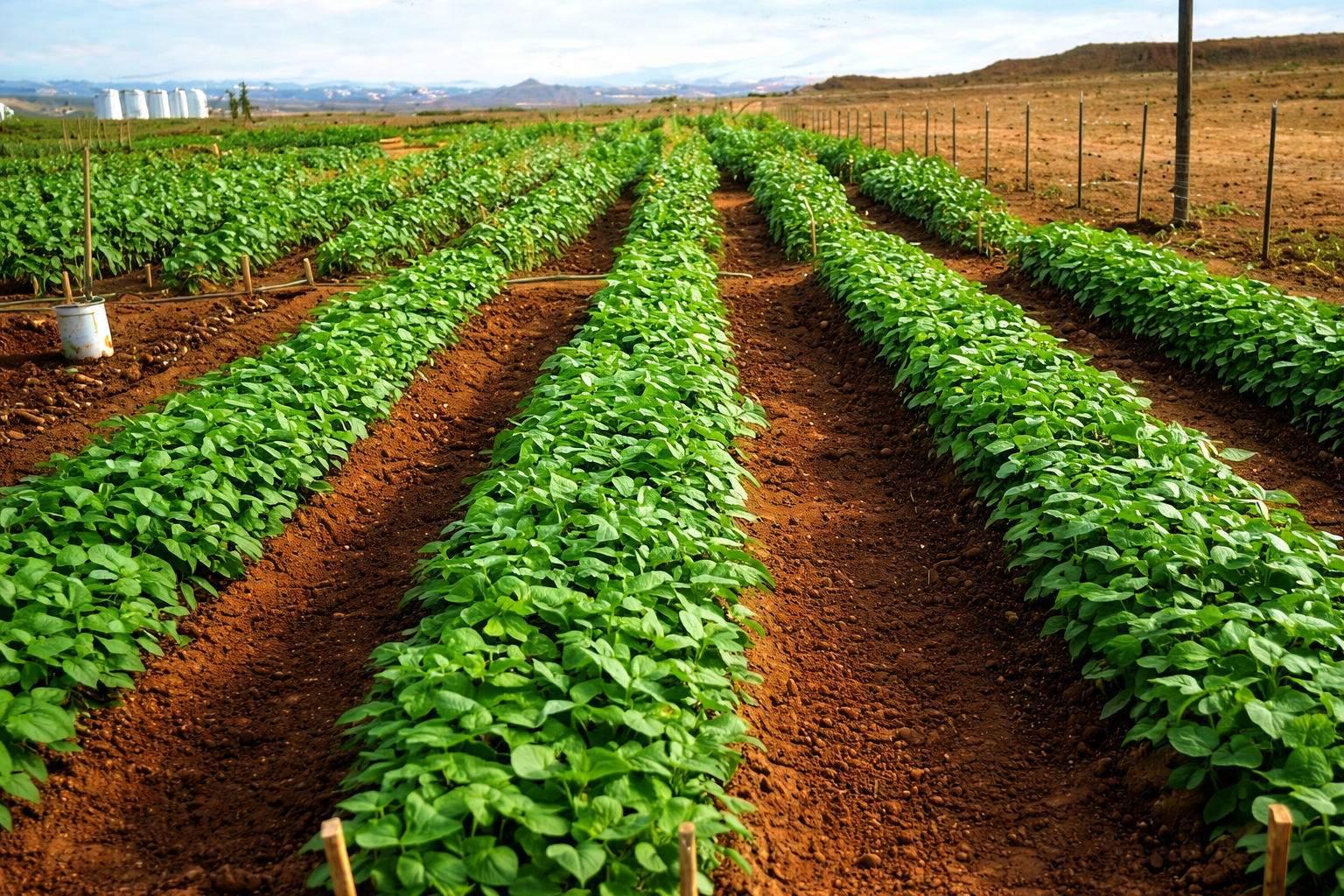
The third leg of FFEF’s global mission is conducting humanitarian projects, such as the above mentioned training project in Armenia. From February to mid July we created a gardening training center in the village of Getk, with housing, classroom, greenhouse, and a 3/4 acre garden. We taught a concentrated college-level gardening course to several students, who became the gardening experts in their own villages, and then we assisted those student graduates in working with 200 families in their villages. The training center and garden were left in the able hands of an Armenian couple, and we expect the work there will continue.
In Armenia, as in other places we’ve worked, we grew many kinds of vegetables the locals thought couldn’t possibly be grown in “their region”, and often have many non-participating village families coming to our garden for advice, coaching, and free produce”.
Humanitarian projects sometimes take the form of training others who are becoming missionaries for their churches. One example is Howard (a retired dentist with little previous experience in gardening) and Glenice Morgan, from Southern California, who completed a 2-year mission to Zimbabwe. They were sent to teach Mittleider gardening to their church members throughout the country, and they did a fabulous job.
After some study and nominal training in FFEF’s garden at Utah’s Hogle Zoo, the Morgans “had the time of their lives” as they created 84 large gardens and taught over 10,500 people throughout Zimbabwe and three other countries to feed themselves by growing their own healthy vegetables. And the only teaching material they used was the simplest and most basic of Mittleider’s books, called 6 Steps to Successful Gardening.
I promise that whatever level you are currently on, you too can experience this kind of success – whether it’s in your own home garden, a community effort, or as a humanitarian missionary in some distant country.
The foundation welcomes tax-deductible donations to help extend our efforts. Gifts can be made at https://growfood.com/non-profit-organization-donate/
Jim Kennard, President
Recap of Foundation Work – 2008-2009
In November of 2007 we were asked by the Church of Jesus Christ of Latter Day Saints (LDS) to go to Popayan, Colombia to conduct a two-year family gardening project. During the first phase we were expected to assist 100 families (60 LDS and 40 non-LDS) to learn and grow gardens.
We established a one acre garden on the Agriculture College campus of the University Del Cauca , including a large seedling greenhouse and storage shed.
Thirty five adult students committed themselves to being Leaders and investing at least 20 hours per week (plus travel time to and from their homes) for three months of intensive training. The training consisted of 2 hours in the classroom and 4+ hours in the garden, three days per week, plus time in their own gardens replicating what they learned, again with our assistance as needed.
In the greenhouse we grew 10,000 seedlings at a time, and tables outside the greenhouse could hold 10,000 more, so we produced ample seedlings for the demonstration garden, our students’ home gardens, plus many to give away to other families in the community.
In spite of very heavy rains 5-7 days per week the Model garden flourished, and after about 6 weeks the College Dean and many of the professors requested that they be taught these scientific gardening principles and procedures. One college class even conducted an experiment which proved the superiority of the Project’s (Mittleider) fertilizers as compared to their traditional materials. This turned out to be very impressive to all who saw it, and was beneficial to the Project.
In the first two months, in addition to the model garden, most of our student leaders created, planted, and cared for gardens at their homes, and very quickly they were being asked to teach and assist their neighbors and friends.
News of the Project soon spread throughout the community, and educators, government agronomists, and even the Mayor and Governor became interested. At the request of the Governor two student leaders created a beautiful and productive garden outside his bedroom window, which was tended by soldiers stationed there to protect the First Family.
The Governor’s support carried much weight in the region, as he was formerly a university president, the Colombian ambassador to Brazil, and the National Defense Minister.
After our departure in the spring of 2008 the man we trained as our replacement started a new training cycle with another large group of students. He was also asked to teach about 90 University Agriculture students. And that Spring six of our best student graduates were hired to replicate the Project in the city’s high schools.
We believe the Popayan Project has the potential to make a very big difference in the way family gardening is done in that area of the country, and that many more than just the 100 families’ lives will be blessed.
After only 10 days to recuperate at home we traveled to Armenia and the Republic of Georgia for a month, to help with on-going projects in those countries.
In Armenia we assisted the FFE Foundation’s Country Director with the current year’s demonstration greenhouse and garden near Gyumri, the country’s second largest city. They are receiving positive attention from growers in that region, with many people requesting seedlings and advice on growing.
The Georgia project is funded by USAID through the International Relief & Development Foundation (IRD). The IRD Country Director, Mr. Charles Specht, had us assist him in teaching and showing 1,080 small farmers in 36 villages how to grow tomatoes using the FFE foundation’s methods.
It was IRD’s second year using our methods, and they had several trained supervisors in place already, so our work this year was made much easier as a consequence.
It was very gratifying to watch and assist as needed, as these good people grew more than 100,000 tomato seedlings in 36 small greenhouses, then transplanted them into the individual farmers’ gardens.
After transplanting they installed T-Frames, with wire and baling twine strings for all those plants to climb, and then fed and watered, pruned and removed sucker stems, and guided them up the strings, so that tomato plants only 8” apart received ample water, food and light, and grew faster, healthier and more productive than anything the country had ever seen before.
The year 2009 was a monster-travel time, with multiple trips to Idaho, Utah, and Arizona, where we taught 15 free day-long seminars to more than 1,500 people from February through April. In May and early June we traveled to Armenia (with a few days in London in transit), and expected to assist another large project in Georgia as well, but a civil war made us decide against taking that risk.
The Foundation’s model/demonstration greenhouse and garden in Getk, Armenia continues to be a success, as it is almost the only garden in the region that survived a couple of severe hail storms in June. The Foundation’s Country Director grows varieties of vegetables that are “impossible to grow” in that region, and is highly respected. She provides seeds and seedlings, answers questions, solves problems, and is highly regarded throughout the community.
After returning home we worked on creating a good greenhouse and garden on our own property, and filming everything as we went, in order to produce an educational DVD outlining the process in as much detail as possible. This has its unique challenges, since the material in which we’re growing consists of a little subsoil and sandstone.
After trying to prepare the beds with a large tiller – going over and over the garden 8 times, we still had to use a pick-axe to get every plant in the ground. And water runs off so quickly that we must water at least once daily, and in the hot weather twice was sometimes not enough. We really got a chance to prove our promise to the world of a “great garden in any soil, with no soil amendments”.
We also worked on putting gardening training materials on several websites, so people, wherever they are around the world can have access to simple methods that will always work no matter what their circumstances are.
We have already created 7 different gardening websites in addition to the Foundation’s main site, and we were successful in getting the simple but highly effective Mittleider Gardening Basics Course onto www.ProvidentLiving.com/familygarden/index.php and the Benson Institute’s website at bensoninstitute.org/Publication/Pamphlets/FVG_Containers_Oct08.pdf. These websites receive more than one million visits each year from LDS Church members, and we have high hopes the gardening module will do some good.
We continue to look for opportunities to assist other groups and organizations wherever possible. In 2009-and into 2010 we have found many opportunities to send gardening training materials to dedicated individuals and groups to assist them in teaching and demonstrating highly productive family gardening principles and procedures.